



Mastering Dice Games: Exploring the Connection Between Probability Theory and Casino Winning Strategies
Introduction
For centuries, dice have been an intrinsic part of human culture, evolving from ancient ritualistic tools into the high-stakes heart of modern casinos. While they have long been used for simple decision-making, their most thrilling application lies in the fast-paced world of dice games, where chance and strategy collide. Beyond the excitement of the gambling floor, these tools serve as a pivotal way to understand the principles of probability theory. In this article, we explore the intricate relationship between dice and probability, revealing how they illustrate core statistical concepts and drive the mechanics behind popular dice games and modern analytics.

The Fundamentals of Dice
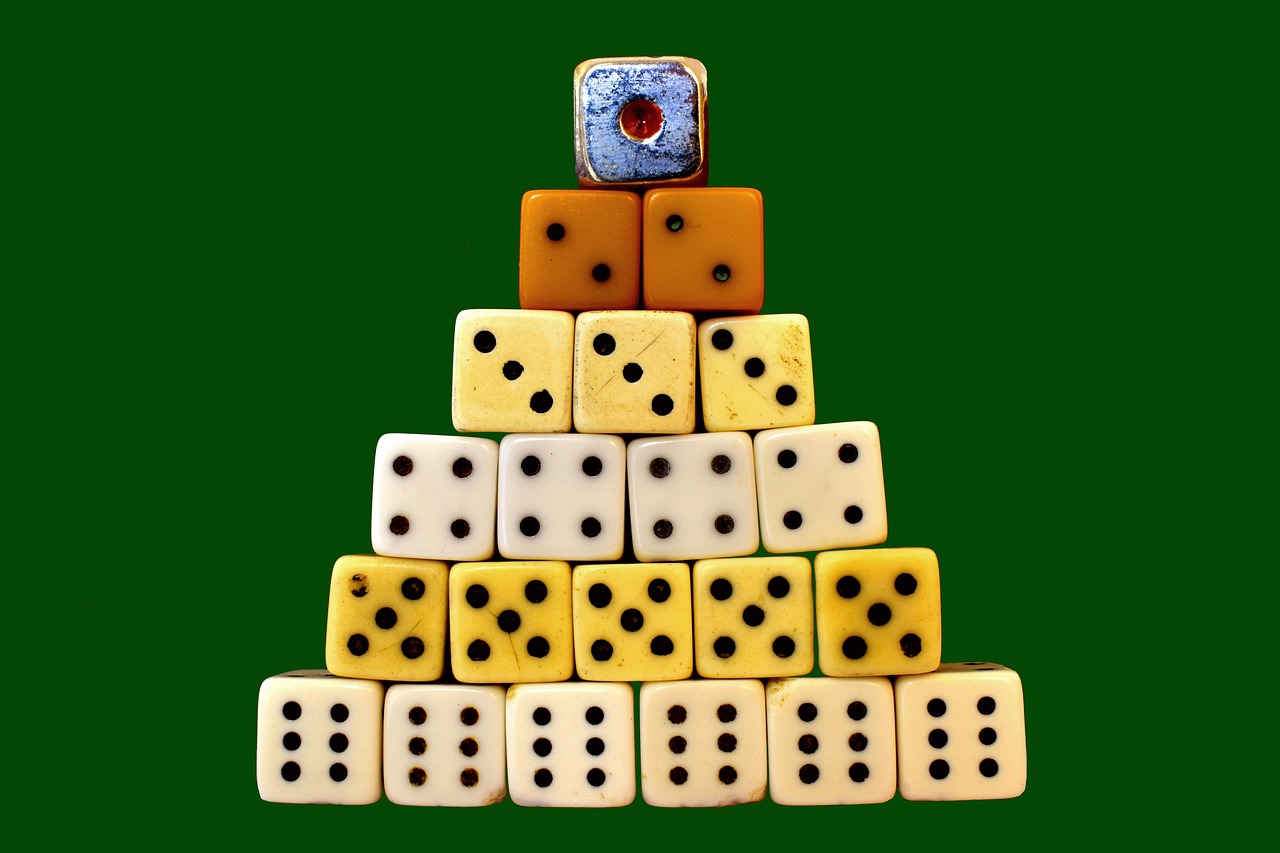
At their core, dice are simple objects: cubes with numbers ranging from one to six on each face. Each die has a total of six faces, and the rules governing their outcome are governed by probability. Understanding these outcomes is the first step in exploring the connection between dice and probability theory.
The Anatomy of a Die
- Faces: The six sides, numbered 1 through 6.
- Edges: The lines connecting two faces.
- Vertices: The corners where edges meet.
Basic Probability Concepts
Before diving deeper, it’s crucial to understand some foundational probability concepts. Probability is defined as the likelihood of an event occurring, calculated as the ratio of favorable outcomes to total possible outcomes. For a single six-sided die, the probability of rolling a specific number is:
Probability (P) = Number of favorable outcomes / Total outcomes = 1/6
Expected Value and Dice
Expected value (EV) is a key concept in probability that helps in decision-making under uncertainty. The EV of rolling a die can be calculated by multiplying each outcome by its probability and summing the results. For a fair six-sided die:
EV = (1/6) imes 1 + (1/6) imes 2 + (1/6) imes 3 + (1/6) imes 4 + (1/6) imes 5 + (1/6) imes 6 = 3.5
Probability Distribution and Dice Games
Probability distributions provide a comprehensive picture of all possible outcomes of rolling dice. When one die is rolled, the outcome follows a uniform distribution. However, when multiple dice are used (like in Craps), the outcome forms a bell-shaped curve, which is a normal distribution. Understanding these distributions is crucial for risk assessment in games.
Dice Games as a Model for Real-life Scenarios
Many dice games, such as Craps and Liar’s Dice, model complex real-life scenarios involving chance and strategy. These games incorporate elements of decision-making based on probability outcomes, making them perfect examples of theoretical principles in action.
Advanced Probability: Conditional Probability
Conditional probability examines the likelihood of an event occurring given that another event has already occurred. For instance, if a player rolled a die twice, and the first roll was a 3, what is the probability that the second roll will also be a 3? It remains 1/6, demonstrating that dice rolls are independent events.
Applications in Gaming and Gambling
Understanding the relationship between dice and probability significantly affects strategies in games such as Poker and Blackjack. Players can assess risks based on the possible outcomes of dice rolls, adapting their strategies accordingly.

Statistical Analysis in Dice Games
The principles of statistical analysis are crucial for any dice game. Analyzing past rolls can help gamblers predict future outcomes, although the inherent randomness of dice means that prediction is never guaranteed. Statistical tools can include:
- Mean and Median Outcomes
- Variance and Standard Deviation
- Confidence Intervals
The Future of Dice and Probability Theory in Gaming
As technology evolves, the connection between dice and probability theory will continue to grow. Virtual reality and online gaming incorporate complex algorithms based on probability, changing how players interact with traditional dice games.
Conclusion
In conclusion, the relationship between dice and probability theory is both fascinating and complex. By understanding the principles of probability, players can not only enhance their skills in various games but also apply these concepts to real-world scenarios. Armed with this knowledge, anyone can approach a game of dice with a strategic mindset, bringing together fun and mathematics in a uniquely engaging way.
Further Reading
For those interested in diving deeper into probability theory and its applications, consider exploring the following external resources:
- Probability Course – An Introduction
- Khan Academy: Statistics and Probability
- Statistics How To – Probability Theory
Frequently Asked Questions
How does probability affect dice games?
Probability determines the likelihood of outcomes in dice games, guiding strategies.
Can you improve at dice games?
Yes, understanding probability concepts can greatly enhance your skills in dice games.
What are common types of dice games?
Popular dice games include Craps, Liar’s Dice, and Yahtzee.

